
For people on supplemental oxygen, regular movement improves circulation, preserves muscle, lifts mood, and — paradoxically — reduces breathlessness over time. A portable concentrator is what makes it practical. Always clear your exercise plan and flow settings with your physician first.
Set up for success
- Wear it hands-free. A ventilated backpack keeps weight centered and both hands free for balance.
- Start charged, carry a spare. Exertion raises your breath rate, which draws more from the battery than resting specs suggest.
- Mind the cannula. Use enough tubing length for your movement, but not so much that it snags.
Build up gradually
Begin with 10-minute flat walks at a pace where you can speak in full sentences. Add five minutes a week. Pulmonary rehab programs use exactly this progression because it works — and because pacing (slow, steady, with planned rests) beats intensity for respiratory patients every time.
Activities that work beautifully with a POC
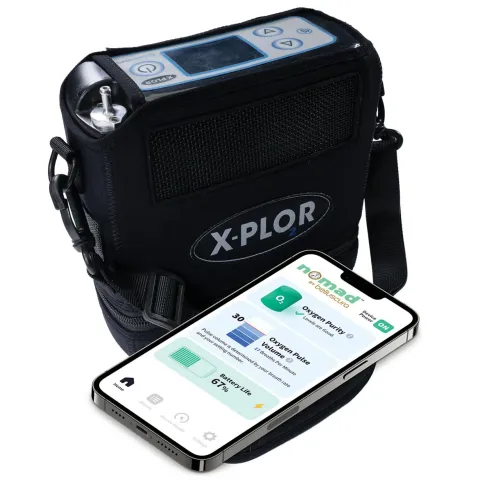
Walking, gardening (raised beds save bending), stationary cycling, tai chi, golf with a cart, birding, light strength work with bands. Owners of sub-4 lb units like the Belluscura X-PLOR tell us the machine stops registering as "equipment" and starts feeling like a water bottle — something you bring, not something that limits you.
Listen to the right signals
Stop and rest if you feel dizzy, chest-tight, or unable to speak in phrases. A pulse oximeter is a $25 training partner: know the SpO₂ floor your physician wants, and respect it. Breathlessness that recovers in a couple of minutes is effort; breathlessness that doesn't is a signal to call your care team.